Category: Uncategorized

Fourteen Years Later: My Steps Were Ordered

My grandmother used to say, “Just keep living.” And if I’m honest, when I was younger, it used to frustrate me. Because when an elder says, “Just keep living,” what you often hear is: You don’t know enough yet. You haven’t lived enough yet. You do not have the wisdom yet to fully understand what you are saying, what you are choosing or what you are walking through. But over these last 14 years, I have come to understand the gift in those words. Just keep living. Time will teach you what urgency cannot. Time will reveal what the moment cannot explain. Time will show you that some doors were not rejection. They were redirection. Time will prove that nothing was wasted. Fourteen years ago, I was working as a legal secretary in a Social Security disability law office. I answered phones, built systems, managed details and listened—really listened—to people. Many of our clients had very little. They were waiting for a government system to support them because illness, disability, limited education and limited opportunity had affected their ability to care for themselves and their families. Every day, I saw how systems could work to the detriment of people who were already carrying more than their share. At the time, I did not know God was preparing me. I did not know that answering those calls was teaching me how to listen to a community. I did not know that building systems in an office was preparing me to build systems in an organization. I did not know that witnessing the consequences of broken systems would eventually help shape my life’s work. Around that same season, a door I thought I wanted did not open. But the relationship connected me to another room—with Stephen Cockrell and Sally Garner—where it became clear that we were about to build something and change something together. And then my journey began. God saw fit to grow me up in community. Over these 14 years, I have learned what works and what does not. I have learned what leadership is and what it is not. I have learned that proximity matters. That listening is strategy. That trust is infrastructure. That policy matters, but so does presence. That transformation requires patience, discipline, courage and deep relationship. I have learned that leadership is not just having vision. It is having the humility to be formed by the work. I have learned that the assignment will grow you before it elevates you. I have learned that you can be in the right place long before you understand why. Today, I live in the very community I have the privilege of serving. I sit in rooms where I help leaders think about how to transform neighborhoods. I guide communities working to improve outcomes for children and families. I mentor women leading organizations and movements across the country. I help influence local, state and federal policy. And every day, I have the honor of contributing to work that is affecting thousands of lives. Fourteen years ago, I could not have fully understood what God was building. I did not know that every assignment, every relationship, every room and every lesson was preparing me for this season of leadership. But my grandmother was right: Just keep living. Because if you keep living, time will teach you. And if you keep trusting, God will show you that your steps were ordered all along. For years, I sang the words, “Order my steps in Your Word, dear Lord.” I led that song in worship countless times. But I understand it differently now. Ordered steps do not always feel clear while you are taking them. Sometimes they look like closed doors. Sometimes they look like small assignments. Sometimes they look like listening before leading. Sometimes they look like being planted in a place long enough to be formed by it. On my 14th anniversary with Woodlawn United, I am deeply grateful. Grateful for every lesson. Grateful for every leader who trusted me. Grateful for every resident who taught me. Grateful for every room I was allowed to enter. Grateful for every room I had to grow into. Grateful for the community that helped raise me as a leader. And grateful for a God who could see the entire road when I could only see the next step. I have found my cadence. I know more deeply who I am, how I lead and what is required of me in this next season—not just to lead more, but to lead better. Fourteen years later, I can say with certainty: My steps were ordered. And they still are.

Read More

Celebrating Last Place: What Juneteenth Means in 2026

The legacy of Juneteenth is more. It is more than just a holiday, and it is more than just a celebration of freedom. The legacy of Juneteenth is a statement about freedom. As this holiday recognizes the delayed freedom of enslaved Americans, the legacy left behind is a timeless message: Freedom will not be celebrated, nor declared, until the last of us are free.

This message, which I see as an admirable refusal, emerged in 1865 and is more relevant than ever in 2026. In Woodlawn, we are accepting it as a charge—a charge to refuse to declare freedom until the Last Place has crossed the finish line. We recognize and acknowledge that freedom—whether financial, physical, spiritual, or mental—is incomplete when only a portion of our community has it. This is a part of the legacy we are building.

For the past year, I have had the opportunity to work on the Programs Team, and I believe it is safe to say that, in everything we do, we celebrate the Last Place. With our hands and our hearts invested in more than 30 programs throughout the Kingston-Woodlawn community, we are doing everything in our power to ensure that no child, no adult, and no soul is left behind.

The week of Juneteenth also marks the beginning of two new programs that reflect what celebrating the Last Place looks like in practice. Through Read 2 Rise, we are walking alongside children who have fallen behind in reading and math, providing individualized support so they are not left to navigate those gaps alone. Through the Navigators Program, we are pairing young people with mentors who can help them build confidence, find direction, and feel supported beyond the classroom. These programs are not just about tutoring or mentorship. They are about refusing to let a child’s future be determined by the gaps around them.

After all, that is what it is about—the one child left out, the one adult left behind, the one heart that needs healing. Our programs are designed to help residents find freedom through education, well-being, and a stable community. If freedom is more about inclusivity and equity than the declaration itself, we must be willing to ask the harder questions:

What does freedom look like if a child cannot read?

What does freedom look like for someone who does not have access to healthy food?

What does freedom look like for someone who cannot afford housing?

It looks incomplete. It feels unfinished.

As we walk into Juneteenth, we accept its message with pride. We celebrate the Last Place not because it is last, but because no community reaches its full potential until the Last Place has crossed the finish line.

Read More

Flourishing Starts With People

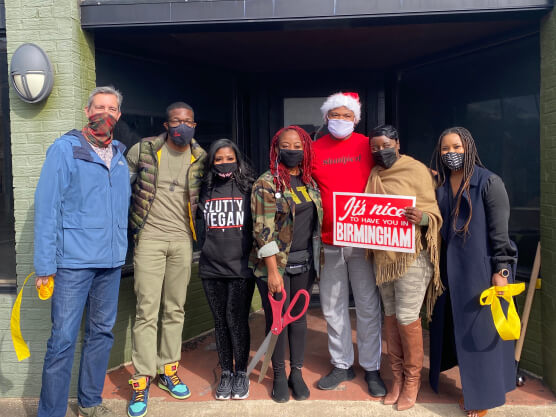
This week I had the opportunity to join leaders from across the country at the Federal Reserve Bank of Atlanta for the Flourishing Neighborhoods Conference, hosted in partnership with Georgia Tech’s Center for Urban Research. I was honored to join the “Visions for Flourishing Neighborhoods” panel alongside Courtney English from the City of Atlanta, Jonathan Ippel of Amplify GR, and James Fritze of NewTown Macon, with Monica Evans facilitating the conversation. We talked about neighborhood revitalization, economic mobility, trust, and what it actually takes to create communities where children and families can thrive. And throughout the conversation, I kept coming back to one thing: This work starts with people. Not assumptions. Not top down solutions. People. The lived experiences of residents should shape the work. Our job is to listen, build trust, respond, and help create the conditions for communities to flourish. What was beautiful is that the conversation did not stay in Atlanta. I came home and watched it unfold in real time throughout Birmingham, and specifically in Woodlawn. The very next day, we hosted Women’s Empowerment: Her Hour in partnership with Girls Girls. And honestly, the event felt less like a program and more like a reminder. A reminder that Woodlawn has always been rooted in strong matriarchal leadership. Women in this community have carried families, blocks, churches, schools, and neighborhoods for generations. They have held things together when resources were limited. They have stretched, sacrificed, nurtured, organized, and led often without recognition. Her Hour created space for women to pour back into themselves while also pouring into one another. It was about wellness, connection, entrepreneurship, leadership, and community. It was about reminding women that they deserve to be supported too. Because when women are supported, communities are supported. And this week, I kept seeing that truth over and over again. I watched Selena open her business while raising a daughter connected to i3 Academy and other community programs shaping the next generation. At the ribbon cutting, her daughter Allison had a pop up gelato stand, and I immediately thought, “We need an ice cream shop in Woodlawn.” Not just because of the ice cream. Because of what it represents. Walkability. Connection. Families gathering. Kids laughing. Neighbors running into each other. Community. I looked at Allison and thought, “Now I’ve got to find you a building.” That moment stayed with me because it represented something bigger than a small business idea. It represented belief. Ownership. Possibility. It represented a young girl seeing herself as someone who could create something in her own neighborhood. And then today, I left another closing table. Cinnamon, another dynamic woman in our community, purchased her first home. As we sat waiting for the final documents to process, her dad looked around the table and said something simple but powerful: “I’ve just got to acknowledge all these women at the table.” And he was right. Besides him, the table was filled with women. Women helping guide the process. Women building wealth. Women supporting one another. Women creating stability for their families and future generations. In that moment, I started reflecting on the entire week. The panel at the Federal Reserve Bank of Atlanta. Her Hour. Women opening businesses. Women mentoring daughters. Women buying homes. Women building community. There is something intentional happening right now. There is a dynamism among women in this city that feels impossible to ignore. Not performative. Not transactional. Transformational. Women are not just participating in the growth happening in Birmingham. In many ways, they are helping shape it. And what excites me most is that this momentum is happening in community. People are supporting one another. Sharing resources. Showing up for each other’s businesses. Creating spaces where people feel seen and connected. That is what flourishing neighborhoods look like. Not just buildings. Not just development. Not just investment. But relationships. Trust. Ownership. Belonging. Vision. The energy is here. The momentum is here. Now we have to match it with long term investment and intentionality. We cannot keep doing surface level work. We have to bring real capital into communities, trust residents and business owners, and build alongside the people who have been holding neighborhoods together all along. Birmingham still has an opportunity to grow intentionally. To grow in a way where existing residents and new residents can thrive together. Neighborhoods are the units of change. And flourishing takes trust, vision, investment, and people willing to believe in what is possible. This week reminded me that the people already doing the work in our communities are often the blueprint. Especially the women.

Read More

Every Week Is Small Business Week in Woodlawn

We believe every week is Small Business Week. But Birmingham is making it official this week, and Woodlawn has real reason to celebrate.

Small businesses are not a nice-to-have in a neighborhood. They are the neighborhood. The barbershop or salon where people catch up on what’s really happening. The restaurant where families mark their milestones. The boutique that carries the aesthetic of a block that’s been here longer than any chain store could imagine. These aren’t just places to spend money. They’re places where community gets made, one transaction and one conversation at a time.

Think about what happens when a locally owned business opens on a corridor that’s been vacant for years. The street feels different. People slow down. They notice. And when those dollars stay local, when a Woodlawn resident spends money at a Woodlawn business, those dollars circulate through the neighborhood before they leave. That’s not a theory. That’s how economic ecosystems work. Research consistently shows that locally owned businesses recirculate a significantly larger share of revenue back into the local economy than national chains do. Every dollar spent locally can generate two to three times the economic impact of that same dollar spent at a chain store. That’s real money, staying in real hands, in this community.

But the conversation about small business has to go deeper than foot traffic and tax revenue. The real work, the work we’re focused on at Woodlawn United, is about economic mobility. Who owns these businesses? Are residents moving from consumer to creator? From worker to owner? When a neighborhood resident opens a business, they’re not just generating income for their family. They’re building an asset. They’re creating jobs for their neighbors. They’re showing the next generation that there is a pathway here, right here, on this street, in this zip code, to build something that lasts.

That’s what’s at stake when we talk about small business development in a place like Woodlawn. It’s not just about filling storefronts. It’s about changing the trajectory of families.

So, this week, we’re celebrating the businesses already here and doing the work: the food spots, the service providers, the nonprofits that operate with the discipline and drive of any small business, the creatives turning their craft into commerce. And we’re continuing to build the infrastructure, the resources, the relationships, the recruitment, that brings more aligned businesses into this community.

The foundation is here. The momentum is real. And every small business that opens, survives, and thrives in Woodlawn is proof of what’s possible when a community decides to invest in itself.

Come shop local. Come eat local. Come see what we’re building.

Read More

Why Programs Matter

A Week of Growth, Joy, and Purpose

This week reminded me exactly why I love what I do. Our Programs Team at Woodlawn United hosted Rise and Thrive Camp: Thrive Week—a week of engaging, structured activities designed for children who were out of school for intersession, or as many call it, “fall break.”

From 11 a.m. to 3 p.m. each day, the Kingston Community Recreation Center became a place where children could learn, create, and connect in a safe and joyful environment.

Takeoff Tuesday: A Day to Remember

Tuesday was Takeoff Tuesday, and it truly lived up to its name. We “took off” from the gym and headed to the Birmingham Civil Rights Institute with 50 children and nearly 25 parents plus our amazing program coordinators, HABD staff, interns, and UAB student volunteers!

For many, it was their very first visit to the Institute. Watching their faces light up as they connected history to their present lives was nothing short of powerful. These moments—of discovery, reflection, and inspiration—are what make community programming so worthwhile.

Creating Safe Spaces That Heal

This week, I witnessed more than fun and field trips, I saw transformation. The Rec Center became a safe haven.

Children found protection there from the ills of the street, the instability of home, and the pressures that often come with growing up in challenging environments. Inside those walls, they found mentorship, compassion, structure, and a sense of belonging.

That’s the beauty of programs like these: they don’t just fill time—they fill hearts. They nurture confidence, build resilience, and connect community across generations.

The Work Ahead

This experience also solidified something I’ve long known: our communities need more.

We need:

•     After-school programs that extend safety, structure, and learning beyond the school day. •     Volunteer literacy coaches to help children strengthen their reading and comprehension. •     Funding to support field trips, enrichment experiences, and exposure opportunities—museums, fine dining, CEO conversations, and career exploration visits.

These experiences protect and empower our youth. They inspire them to dream bigger and aim higher.

Why I Love This Work

I love my job because it allows me to witness growth, unity, and joy every single day. I see parents and children laughing together, elders guiding youth, and neighbors turning into a community family.

Programs like these build bridges—between people, between generations, and between hope and opportunity.

That’s why programs matter. That’s why I’ll always advocate for them.

About the Author

LaShunta “Shun” Boler

Chief Programs Officer, Woodlawn United

Shun is a visionary leader and community advocate with over 20 years of experience in social wellness, urban education, and community development. As the Chief Programs Officer at Woodlawn United, she leads initiatives that strengthen families, empower youth, and foster intergenerational connections across the Woodlawn–Kingston footprint.

Shun is deeply passionate about creating programs that offer safe spaces, build resilience, and expose children and families to opportunities beyond their everyday experiences. Known for her trauma-informed approach and compassionate leadership, she believes that when communities are given access, they find the power to transform themselves.

Read More

Bridging Policy and Community

In August 2023, I joined Woodlawn United as the Director of Development and Communications. It was an exciting opportunity to share the stories of transformation taking place in Woodlawn and to elevate the voices of our residents, partners, and leaders. Over time, I came to see just how deeply connected our work is to policy—local, state, and federal—and how policy decisions can either strengthen or stall the progress happening in communities like ours. This past January, I transitioned into a new role as Woodlawn United’s Director of Advocacy and Engagement. In this position, I focus more directly on policy and how it can support and empower the work happening on the ground in Woodlawn. Policy is not just abstract legislation; it’s the framework that shapes opportunities, access, and resources for families and neighborhoods. One of the most exciting parts of this new role has been building and fostering relationships with elected leaders. Whether at the city, state, or federal level, these relationships are critical. When leaders understand what is happening in Woodlawn—when they see the innovative, community-driven work firsthand—it opens doors for collaboration, investment, and lasting change. By creating these connections, I’m helping bring more awareness and opportunities to our community, ensuring that policy works for the people it’s meant to serve. Over the past few months, I’ve had the privilege of participating in conversations that bridge the gap between community needs and legislative action. I attended the Southern Legislative Conference and the Business Council of Alabama’s Legislative Conference, both of which provided opportunities to connect with policymakers and peers from across the region. These gatherings were a reminder of the importance of having a seat at the table—and of making sure Woodlawn’s story is part of the broader policy dialogue. I’ve also had the opportunity to meet directly with both state and U.S. representatives, sharing how they can engage more deeply in the transformational work happening in Woodlawn. These discussions are about more than policy; they’re about partnership, vision, and the collective responsibility to drive positive change. As I continue to grow into this role, I’m energized by the opportunity to serve as a bridge between Woodlawn and the policymakers who help shape its future. Together, we can ensure that policy not only reflects community priorities but also amplifies the work already underway to make Woodlawn a place where families thrive.

Read More

The Cottages on Georgia Road: A New Beginning

This groundbreaking was years in the making, and worth the wait.

The vision for these homes began back in 2019. Then came the global pandemic. Plans slowed, costs climbed, and progress came to a halt. But the need for safe, affordable housing in Woodlawn never went away.

When the world opened back up, our team went back to work. Staff members Joe Ayers and Leigh Hancock re-engaged every partner and renegotiated every detail. Their persistence ensured the project stayed alive. And in many ways, the delay brought an unexpected silver lining. With time came new opportunities for support. The City of Birmingham and the Alabama Housing Finance Authority stepped in with additional resources, strengthening the project for the future.

Last week, that persistence paid off. More than 100 neighbors, stakeholders, elected officials, business leaders, and nonprofit partners gathered, some traveling from as far as Huntsville, to witness the groundbreaking at The Cottages on Georgia Road. What could have been just another ceremony became a true community celebration.

“This groundbreaking represents more than the start of construction. It’s the beginning of new possibilities for families in Woodlawn. We are deeply grateful to our partners who share our vision of creating thriving, connected communities.”

Mashonda S. Taylor, President & CEO, Woodlawn United

This milestone was made possible through the power of partnership. Together with Navigate Affordable Housing Partners, the Alabama Housing Finance Authority, the Housing Authority of the Birmingham District, the City of Birmingham, SouthState Bank, the Community Foundation of Greater Birmingham, Syms Contractors, Dynamic Civil Solutions, and Cohen Carnaggio Reynolds, we are building toward a vision where every resident has access to safe, affordable housing and a true sense of belonging.

The Cottages are more than buildings. They represent stability for families, opportunity for growth, and a future where Woodlawn continues to thrive. What began as plans on paper is now a living promise, a promise that together, we can create homes that nurture both people and community.

Read More

13 Years of Service and a Neighborhood Still Rising

Change doesn’t happen overnight. It happens when people stay committed, remain present, and continue showing up for their community.

At Woodlawn United, we’ve spent the last 15 years walking alongside neighbors, partners, and advocates with a shared vision: to help this community thrive in place. That vision has taken shape not just through plans and programs, but through people. People who serve. People who lead. People who believe.

One of those people is Mashonda Taylor.

Thirteen years ago, Mashonda joined Woodlawn United as an office administrator. Today, she serves as President and CEO. Her steady commitment over the years has helped shape the organization’s growth and deepen its connection to the neighborhood we serve.

“Every step of this journey has been guided by trust, community, and an unwavering belief in the power of place.” — Mashonda Taylor
Her exceptional leadership has garnered widespread recognition. In 2023, she was named Non-Profit CEO of the Year by the Birmingham Business Journal. She is also a 2023 Leadership Birmingham Class member, a Class I member of the Alabama Leadership Initiative, a member of the Rotary Club of Birmingham, a 2025 Mosaic Fellow with Mosaic Changemakers, and a charter member of the National Council of Negro Women – Birmingham Chapter.

Her path is just one part of the story, but it reflects the values that have made our progress possible: consistency, humility, and a commitment to the people who make up Woodlawn.

  Over a Decade of Steady Growth

Over the last 15 years, we’ve worked together to make long-term, community-rooted progress. Here’s what that progress looks like:

  • – Grown service reach from 5,000 to 8,000 residents
  • – Increased the partner network from 40 to more than 70 organizations
  • – Built and supported community assets including housing, schools, and infrastructure
  • – Developed mixed-income housing to expand access to quality, affordable homes
  • – Launched more than 20 new businesses, strengthening the local economy
  • – Increased homeownership from 18% to 28%, building generational stability
  • – Reduced crime by 36% through holistic public safety efforts
  • – Created and advanced public policy that reflects community priorities
  • – Helped change charter school legislation to give Woodlawn residents enrollment priority
  • – Hosted policymakers from across the Southeast to share local strategies
  • – Hosted the Purpose Built Communities ® conference in 2016 and 2020
  • – Expanded wraparound support across the entire Woodlawn feeder pattern
  • – Graduated more than 50 emerging leaders through the WE Lead program
  These milestones are a reflection of what’s possible when we build with, not for, the community. The progress we’ve made reflects years of collective effort, steady leadership, and a shared belief in what this neighborhood can become.   Join Us in Celebration

On Saturday, October 4, we’ll gather to celebrate 15 years of Woodlawn United at our signature event, Woodlawn Saturday Supper. This isn’t just a meal. It’s a moment to reflect, reconnect, and honor the people and progress that got us here.

We’ll be back on the block at Woodlawn Street Market with food, music, storytelling, and space for neighbors and partners to come together.

Want to see what makes this event special?

Catch the energy from last year on Instagram: https://www.instagram.com/reel/DBJl6ymRzdP/?utm_source=ig_web_copy_link&igsh=MzRlODBiNWFlZA==

We hope you’ll join us as we celebrate how far we’ve come and look ahead to what’s possible next.

Read More

A Legacy That Launched Woodlawn United: In Memory of Tom Cousins

Message to Woodlawn United Board Members and Community on the Passing of Tom Cousins


It is with great sadness that I inform you of the passing of Tom Cousins at the age of ninety-three. Tom was a great friend and mentor. In 1995, he established the East Lake Foundation to revitalize the East Lake neighborhood, one of Atlanta’s most dilapidated communities at the time.

When I retired in 2008, Gillian and I visited Tom and his wife, Ann. Tom explained his holistic model of neighborhood revitalization: an education pipeline from cradle to college and career, mixed-income housing, and wraparound services, all essential components of a vital and vibrant neighborhood. He later created Purpose Built Communities®, inspired by the East Lake model, to help revitalize neighborhoods across the country.

That visit sparked the beginning of what would become Woodlawn United. Gillian and I began planning its creation based on the Purpose Built Communities model. Today, the Woodlawn neighborhood stands alongside nearly thirty others as part of the Purpose Built Communities Network. These communities are now vibrant and thriving thanks to Tom’s vision and passion.

Tom was a unique individual who not only had the foresight to dream of a better future but also the determination and ability to bring those dreams to life.

We will miss Tom dearly and send our deepest condolences to his wife, Ann, and the entire Cousins family.

  T. Michael Goodrich, Sr.

Founding Chairman, Woodlawn United

Read More

Policy in Proximity: What the Southern Legislative Conference Taught Us About Listening, Leading, and Building Stronger Communities

A Message from our Director of Advocacy and Engagement 

At Woodlawn United, we believe real change starts with presence — listening closely to residents and working together to shape policies that reflect real needs. That belief came to life as we hosted a delegation of lawmakers during this year’s Southern Legislative Conference (SLC), right here in the heart of Woodlawn.

The SLC brought together legislators from across the Southeast to share ideas, learn from one another, and explore the issues impacting the people and places we serve. As one of the selected host sites, Woodlawn United had the opportunity to spotlight the power of place-based work and community-rooted partnerships.

Our President & CEO, Mashonda S. Taylor, moderated a timely and impactful fireside chat on how public policy shapes neighborhoods and quality of life. The panel featured Rep. Leigh Hulsey, Rep. Neil Rafferty, Rep. Kelvin Datcher, and Sen. Robert Stewart — leaders focused on shaping policy through the lens of impact and inclusion.

Together, they explored how policy intersects with daily realities like housing, education, infrastructure, and economic opportunity. Whether in Birmingham or in rural communities across Alabama, the issues may look different — but the core challenges (and the opportunities) are often the same.

Proximity is power. When we’re close to the problems, we can co-create solutions that are effective, sustainable, and rooted in trust. The issues residents bring forward — affordable housing, quality schools, safe streets, reliable transit — aren’t theoretical. They’re real, and they deserve policy grounded in empathy and shared vision.

The Conference reminded us that deep listening matters. Not just to data, but to people. It also created space to build meaningful relationships with legislators who are committed to doing this work alongside communities. Good policy is a team effort. And when residents, elected leaders, and organizations like Woodlawn United move together, real transformation is possible.

We’re thankful to the Southern Legislative Conference for giving us the space to share our story — and even more energized by what’s ahead. When policy and proximity align, lasting change takes root.

Read More